Yellow Hat — UX for AI‑powered property management
UX research and product design for a property-management automation platform: simplifying the fragmented daily toolchain of property managers. Platform metrics reflect its continued development by the Yellow Hat team, following the foundational UX work I contributed.
YellowHat is an AI powered property management platform designed to streamline operations for teams managing multi unit residential and commercial properties. During my time on the project, I led research, discovery, and UX architecture, helping define the core workflows, information hierarchy, and user experience foundations of the platform.
My work focused on consolidating fragmented processes—communication, maintenance, reporting, and document workflows—into a cohesive interface that could support scalable AI driven automation. The completed UX system enabled the product team to continue development, expand features, and prepare for broader rollout.


As Lead UX/UI Designer for YellowHat, I was responsible for establishing the foundational user experience architecture for an AI-powered property management platform from its earliest stages. My role spanned the complete discovery and design process, from initial research through the creation of a comprehensive design system that would guide the platform's development.
Working closely with stakeholders and the development team, I translated complex operational requirements into intuitive workflows, scalable information architecture, and a cohesive visual design language. My deliverables included wireframes, interactive prototypes, user flows, and a complete design system with modular components—all designed to support intelligent automation and accommodate future growth across multiple property types and user roles.


Property managers routinely juggle multiple systems, resulting in inefficiency, inconsistent data, and high administrative burden. The YellowHat team needed a clear UX strategy to unify these tools and support intelligent automation while enabling scalable AI integration across the platform.
From a UX perspective, the challenge was designing an interface that could accommodate diverse workflows across different property types and team sizes while maintaining simplicity. The system needed to handle everything from routine maintenance requests to complex financial reporting, all while introducing AI-powered features that users would trust and adopt naturally.

I conducted the early foundational research for the YellowHat platform, including 30+ interviews with property managers across different portfolio sizes, workflow analysis of maintenance, leasing, communication, and reporting processes, and mapping the ecosystem of competing tools and integration gaps.
Key insights revealed that managers switched between 5-8 tools per day, with nearly 30% of time lost to repetitive admin tasks. Maintenance coordination and follow-up emerged as the #1 friction point, while financial reporting required significant manual aggregation.

Real-time performance metrics and portfolio overview in single view
Information architecture supporting multiple roles and property types
Intelligent routing, automation concepts, and alert systems
Flexible component library enabling consistent feature growth
Based on research insights, I created the initial UX architecture and design system for the unified platform. My deliverables included a real-time dashboard for performance metrics, scalable information architecture supporting multiple roles and property types, intuitive workflows for maintenance, communication, and reporting, and early concepts for AI-powered routing and automation.
The solution encompassed wireframes, prototypes, and user flows for all primary journeys, along with a flexible design system enabling consistent feature growth. Key features included intelligent maintenance request routing, vendor coordination workflows, AI-assisted tenant communication, automated reporting templates, and a unified inbox with communication hub—all designed with mobile-responsive layouts for field teams.

While I was not involved in the full product lifecycle or company operations, my UX architecture and foundational design work helped position YellowHat for continued development and market expansion. Early outcomes from the team's ongoing rollout demonstrated strong adoption, with the platform scaling to support hundreds of property managers across multi-state portfolios.
The scalable information architecture and design system I established allowed the product team to rapidly iterate and expand features post-handoff. The modular component library and well-documented UX patterns ensured consistency as new functionality was added, while the AI-ready framework I designed enabled seamless integration of intelligent automation features that became core to the platform's value proposition.
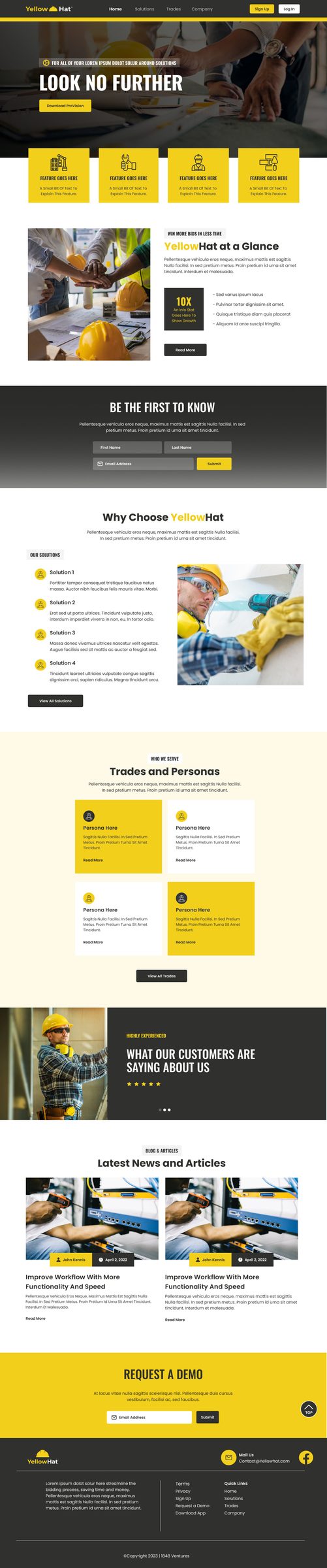
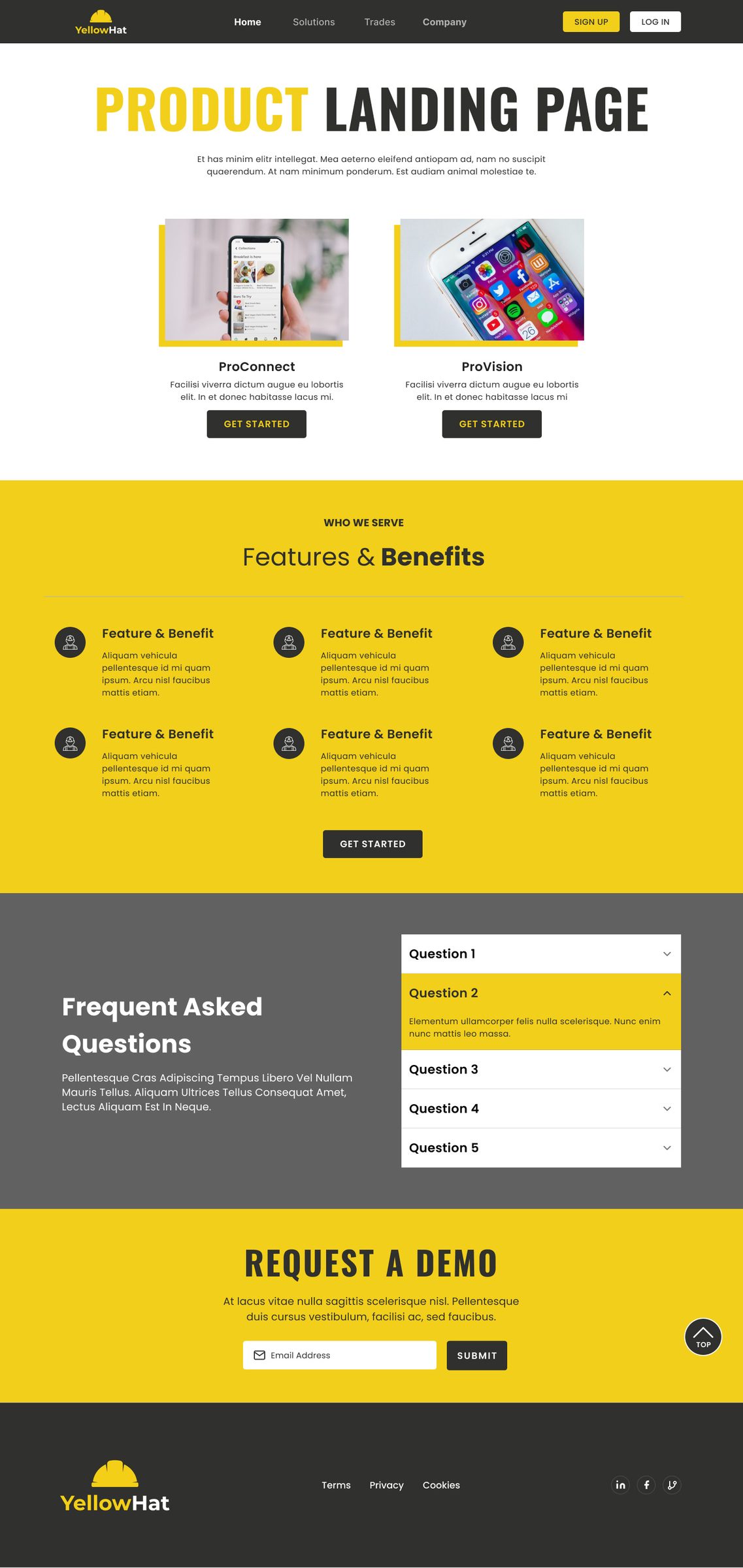
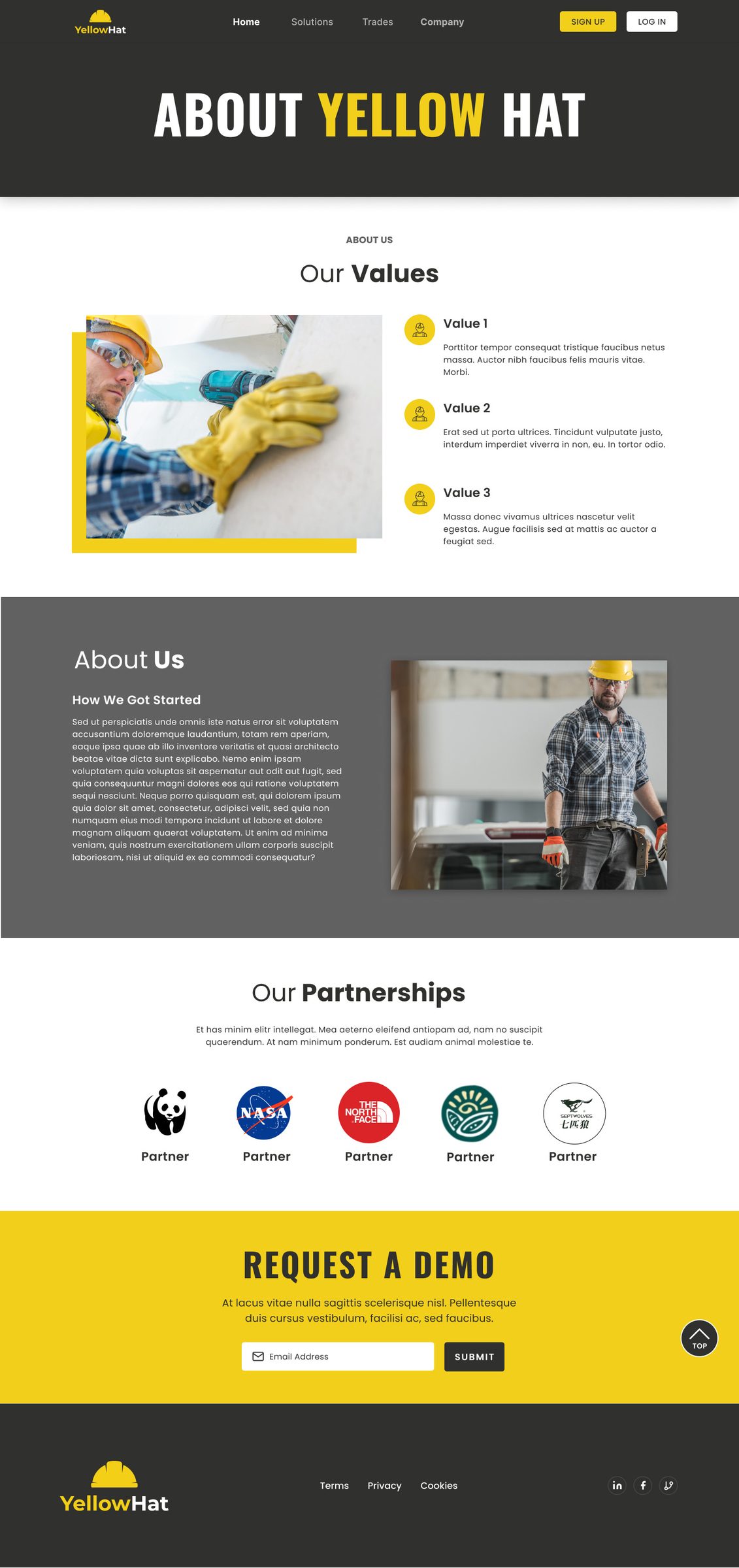
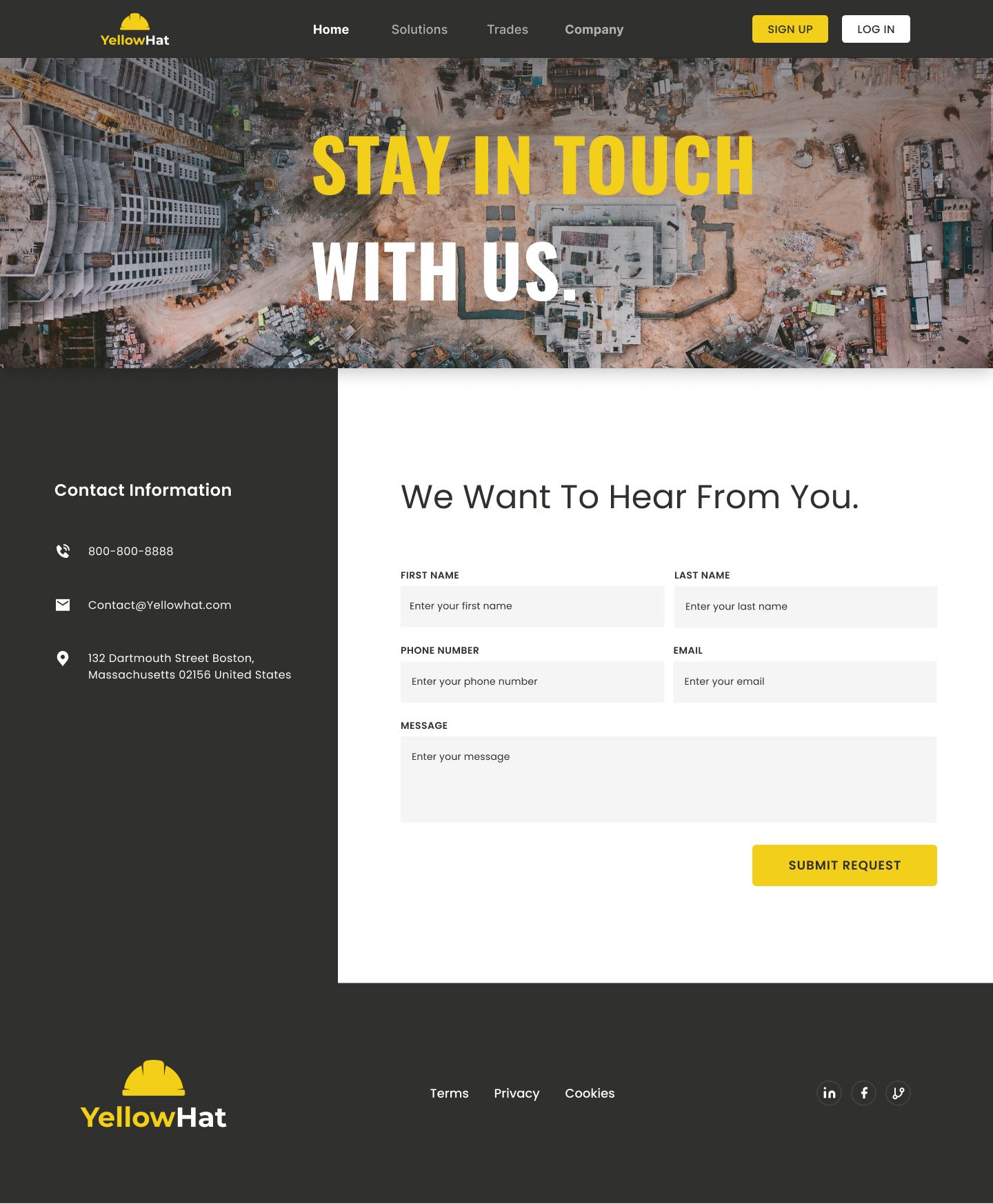
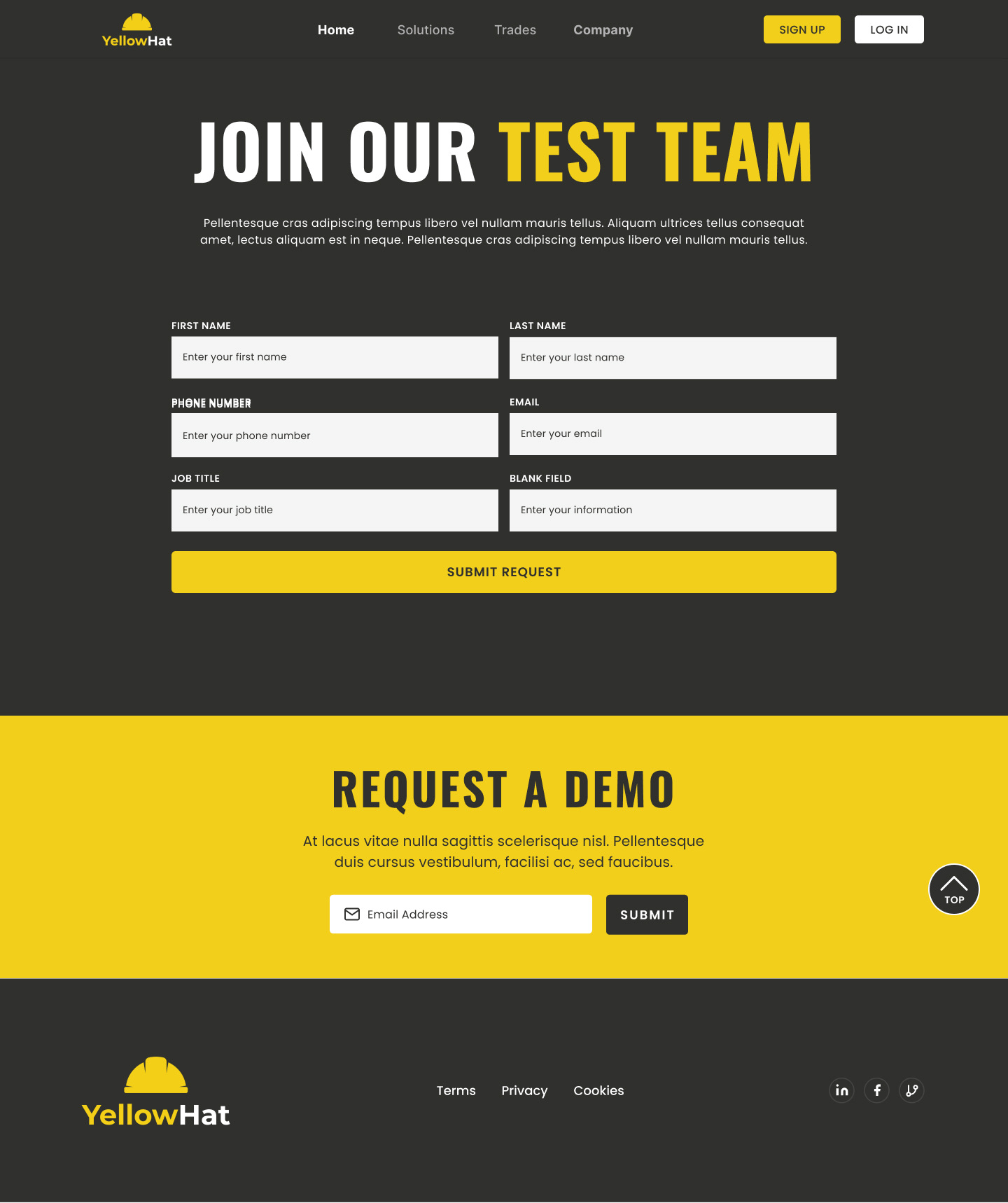
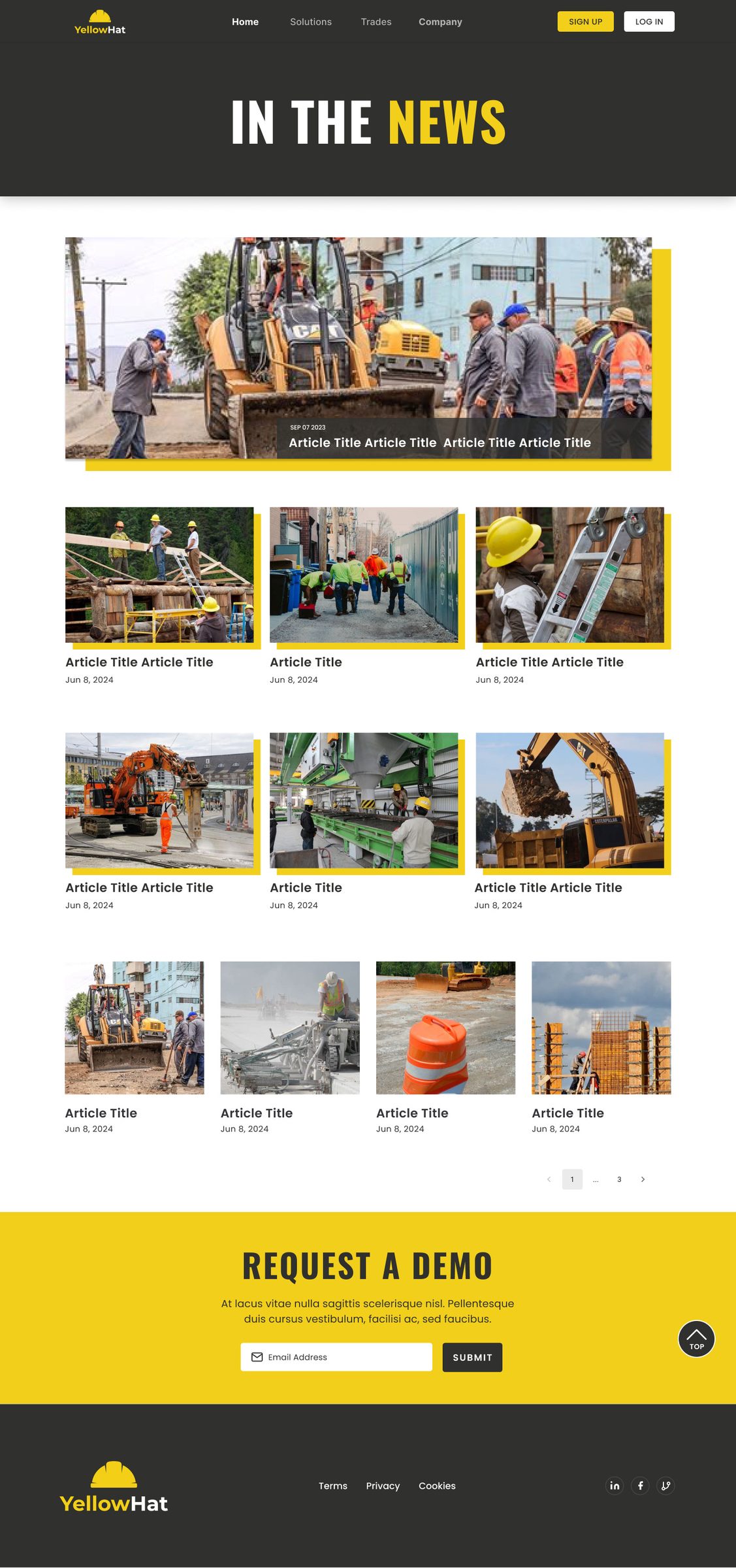
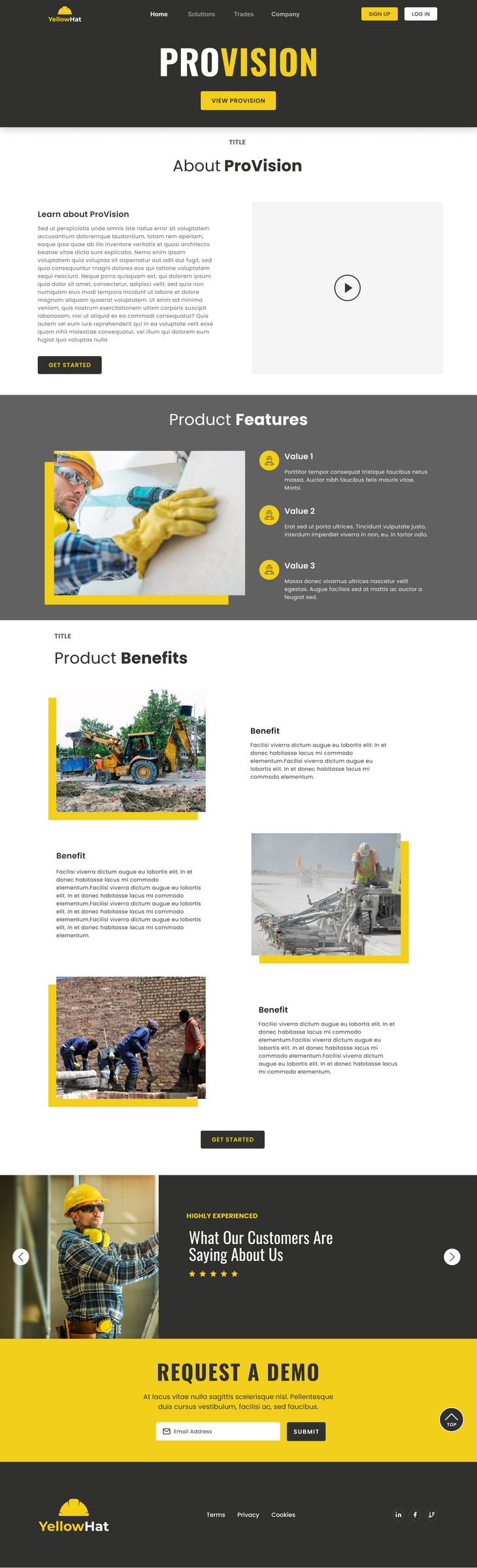
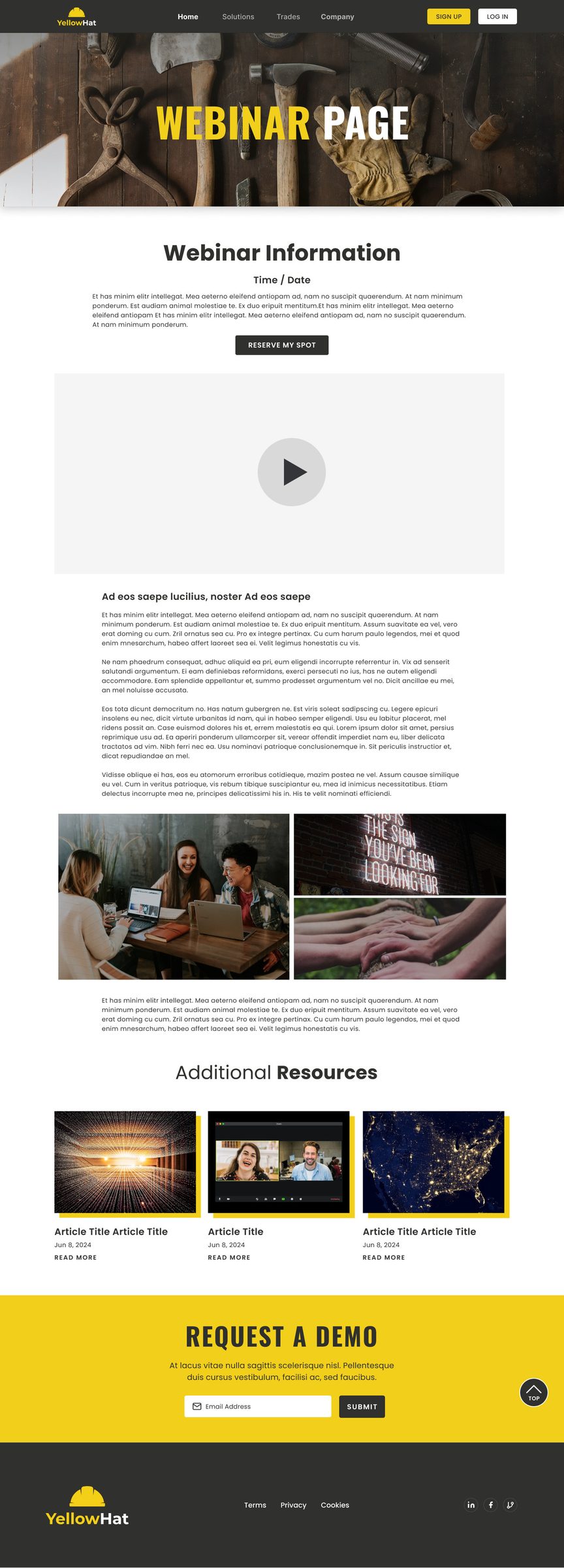
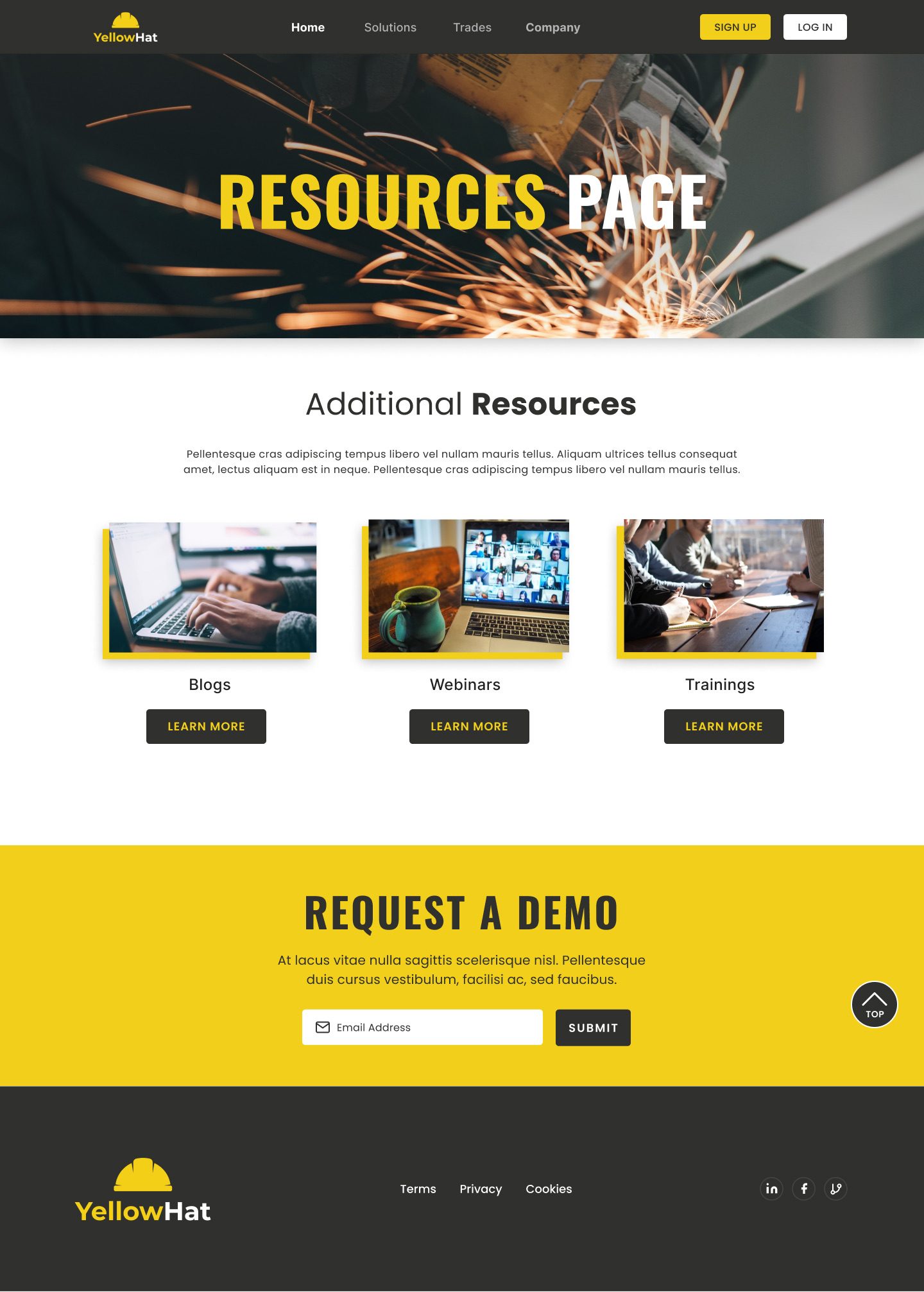
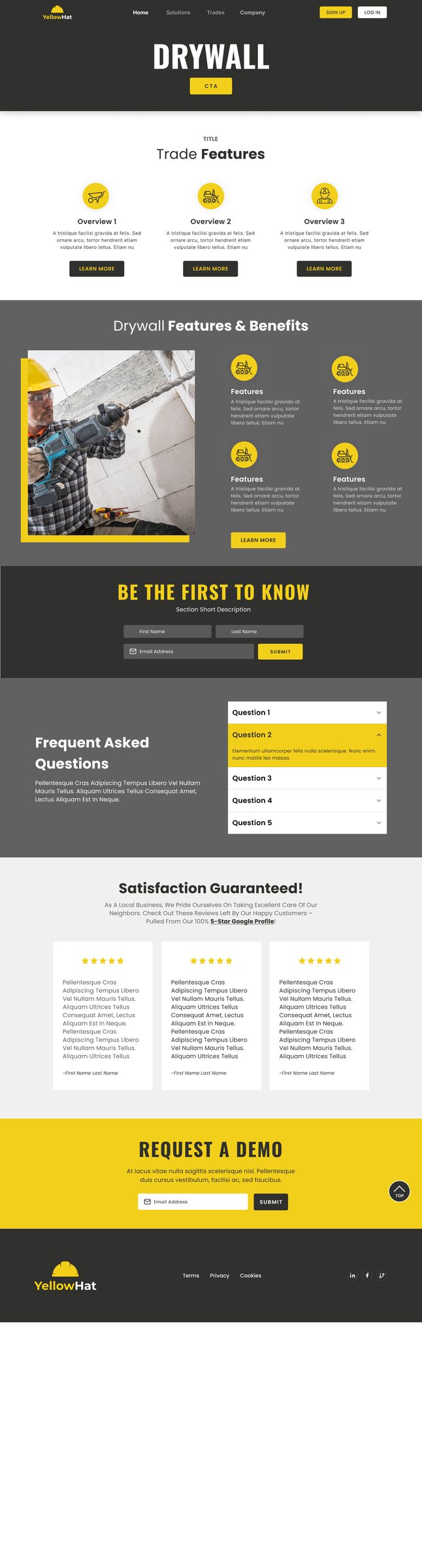
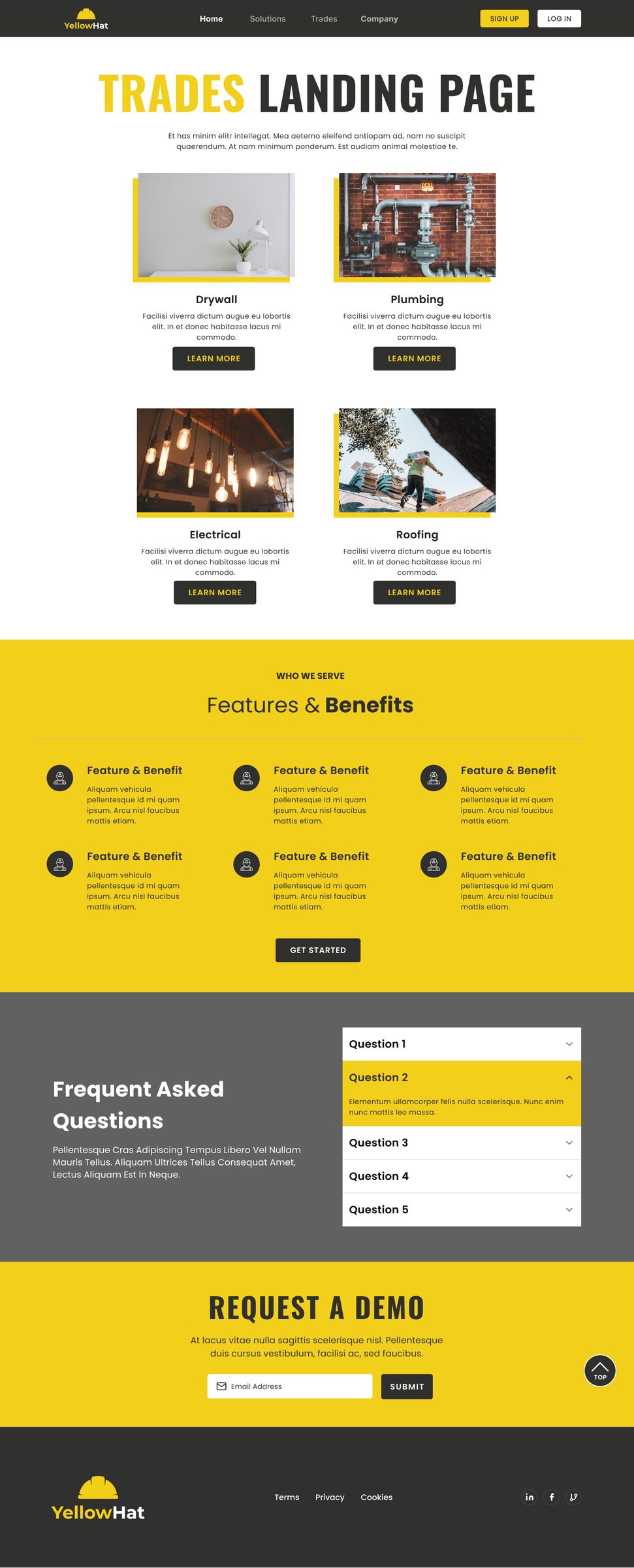
Alongside the product UX, I built the YellowHat brand system and documented it in a Brand Standards Web Guide: a palette of signature yellow (#F2CF1B) on charcoal (#30302D) with supporting grays, Oswald Bold for all-caps hero headlines, Poppins for headings, body, and UI, and clear component rules—yellow buttons on dark backgrounds, dark buttons on light, and logo lockups that always carry the TM mark.
The brand sheet and social post layouts shown here are set in that system, pulling their copy directly from the platform's marketing site—"Look No Further," "Be the First to Know," "Request a Demo"—alongside the real brand banner produced for the project. Together they show how the identity extends from product UI to outbound marketing without losing consistency.
